Holistic Education – Beyond Academics: What Parents Expect from Schools Today
Education has evolved far beyond textbooks, exams, and marks. Today’s parents are deeply invested in how schools prepare children for real life—not just academic success. They expect institutions to focus on emotional intelligence, creativity, leadership, communication, and life skills alongside academics. This shift has made Holistic Education a central expectation rather than an optional add-on. Schools that fail to adapt risk losing relevance, trust, and long-term enrolment growth.
At Campus Captain, we work closely with institutions to design co-curricular programs that support Holistic Education as Foundation Years – Grade 1-5, Exploratory Stage – Grade 6-8, Advanced Skill Building – Grade 9-12 in a structured, measurable, and future-ready way.

Why Parents Are Looking Beyond Academics
Modern parents understand that marks alone do not guarantee success. The world now demands adaptability, confidence, creativity, and problem-solving ability.
Parents expect schools to:
Build communication and leadership skills
Encourage creativity and innovation
Develop emotional and social intelligence
Introduce technology and real-world skills early
Support mental well-being and self-awareness
All of these expectations point to one core demand: Holistic Education.
What Holistic Education Means in Today’s Schools
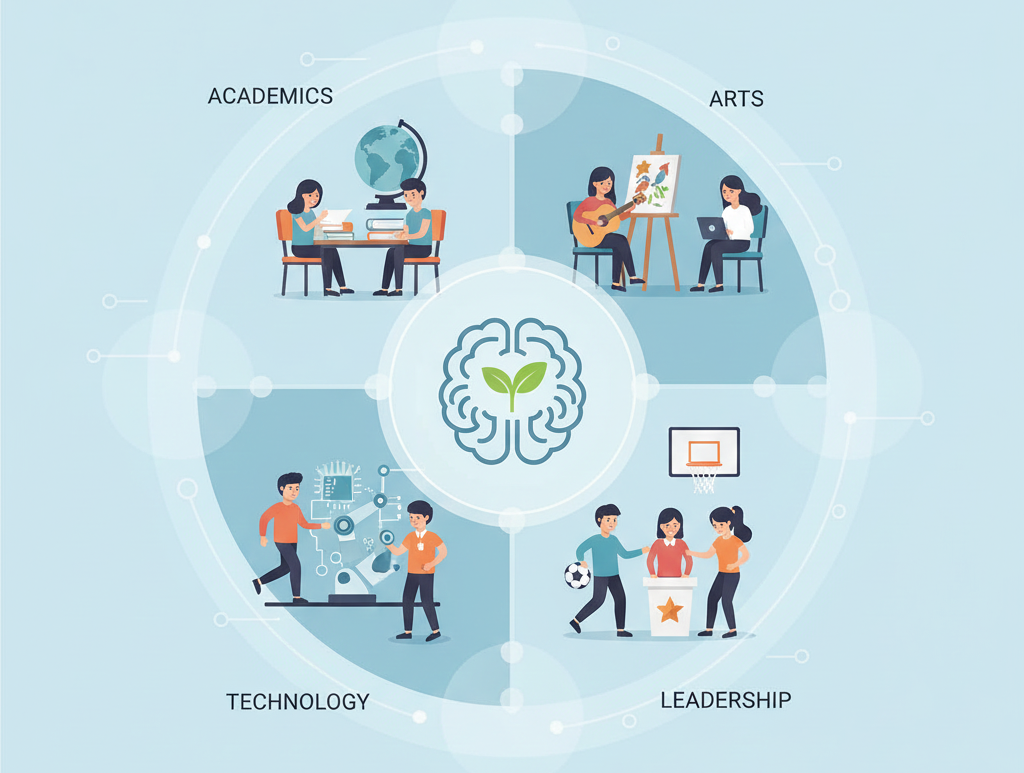
Holistic Education focuses on the complete development of a child—intellectual, emotional, physical, social, and ethical.
It integrates:
Academics
Co-curricular activities
Skill development
Character building
Career readiness
Parents no longer want fragmented activities. They expect Holistic Education to be embedded into the school ecosystem, not treated as occasional workshops.
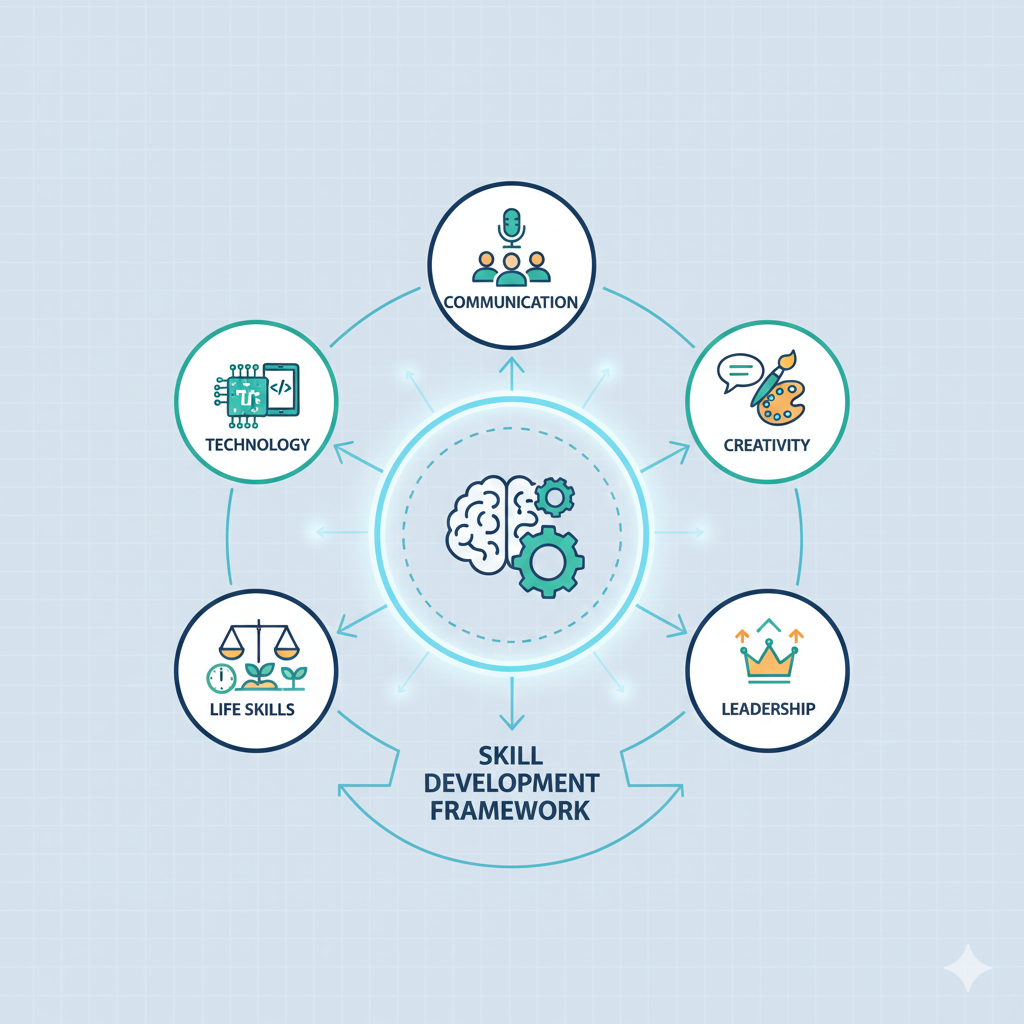
Key Areas Parents Expect Schools to Strengthen
1. Communication & Confidence Building
Public speaking, storytelling, debates, and presentations are now non-negotiable. Parents expect schools to nurture articulation, clarity, and stage confidence as part of Holistic Education, starting from early grades.
2. Creative Expression & Innovation
Art, music, drama, photography, design, and creative writing are not “extra activities” anymore. They play a crucial role in emotional expression and cognitive growth, reinforcing Holistic Education principles.
3. Technology & Future Skills
Parents expect exposure to:
Coding and robotics
AI and machine learning basics
Web and app development
Digital literacy and safety
Technology-driven co-curricular programs are now a core pillar of Holistic Education, not just senior-grade electives.

4. Life Skills & Emotional Intelligence
Financial literacy, leadership, teamwork, negotiation, ethics, and decision-making are areas parents actively look for.
Schools offering structured life-skill programs demonstrate a strong commitment to Holistic Education and long-term student success.
5. Career Awareness & Real-World Exposure
From entrepreneurship and digital marketing to aviation, psychology, and space sciences—parents value early exposure to diverse career paths as part of Holistic Education.
This helps students make informed choices instead of last-minute decisions under pressure.
Why Co-Curricular Structure Matters More Than Ever
Random activities do not build outcomes. Parents expect:
Age-appropriate progression
Skill continuity across grades
Measurable learning outcomes
Curriculum-aligned co-curricular planning
A structured approach ensures Holistic Education is intentional, scalable, and impactful.
Campus Captain’s Approach to Holistic Education
Campus Captain partners with institutions to implement:
Grade-wise skill development programs
Curriculum-aligned co-curricular frameworks
Technology, creativity, and life-skill integration
Faculty support and implementation models
Our programs are designed to help schools deliver Holistic Education without increasing operational complexity.
The Competitive Advantage for Institutions
Institutions that prioritize Holistic Education benefit from:
Stronger parent trust
Improved student engagement
Better learning outcomes
Enhanced institutional branding
Long-term enrolment sustainability
In today’s education landscape, Holistic Education is not a trend—it is the new standard.

Final Thoughts
Parents today are not demanding that schools compromise on academic excellence. Instead, they are seeking a well-balanced approach that combines strong academics with real-world relevance, emotional development, and practical life skills. They want their children to be confident, adaptable, and prepared for challenges beyond examinations and classrooms.
Schools that genuinely embrace Holistic Education through well-structured, age-appropriate co-curricular programs position themselves as future-ready institutions. By nurturing intellectual, creative, emotional, and social growth together, these schools not only meet evolving parent expectations but also take a leadership role in shaping the future of education.